There are moments in a company’s life that no PowerPoint or brainstorming session can fix. Teams that don’t click, departments working in silos, talent slowly dissolving in daily routines. And then, someone has a brilliant — and seemingly harmless — idea: “Let’s cook together.”
What begins as a cheerful activity, an excuse to ditch the boardroom and put on an apron, often ends up becoming one of the most memorable team-building experiences ever. Not just for the taste of the final dish, but for everything that gets stirred up between pans and chopping boards. The kitchen — so intimate, so universal — becomes a battleground of alliances, a lab of trust, and a living metaphor for what it means to work together.
This article isn’t just another “fun corporate ideas” list. It’s a deep-dive into why culinary experiences are redefining the way companies approach team dynamics. And why Barcelona, with its Mediterranean soul and love for flavor, is the perfect setting for it.
What no one tells you about cooking with your team
Let’s skip the typical bullet points that tell you “what you’ll learn.” Instead, think of this piece as a tasting menu: full of surprises, textures, and plenty of flavor.
You’ll see that cooking in a group isn’t just about stirring a paella or passing around tapas. It’s about building bridges. About seeing your finance colleague without a spreadsheet barrier. About finding out how your manager reacts when the olive oil runs out and plan B is needed. Because believe me — what happens in the kitchen doesn’t stay in the kitchen.
We’ll explore how gastronomy becomes an extraordinary tool for cohesion — one that’s often underestimated. You’ll discover different ways to make it work: from calm, guided workshops to fiery MasterChef-style challenges. And of course, we’ll spotlight experiences like those from We Chef BCN, who have mastered the art of turning kitchens into spaces of transformation.
We’ll also touch on the logistics: how to plan, what to expect, how to adapt to different team needs. And we won’t shy away from the uncomfortable questions: Is this just a trend? Will everyone enjoy it? What if someone hates cooking?
There are no gimmicks here — just stories, strategies, and a good dose of seasoning.
Gastronomic dynamics: where teams are slow-cooked to perfection
The kitchen as the great equalizer
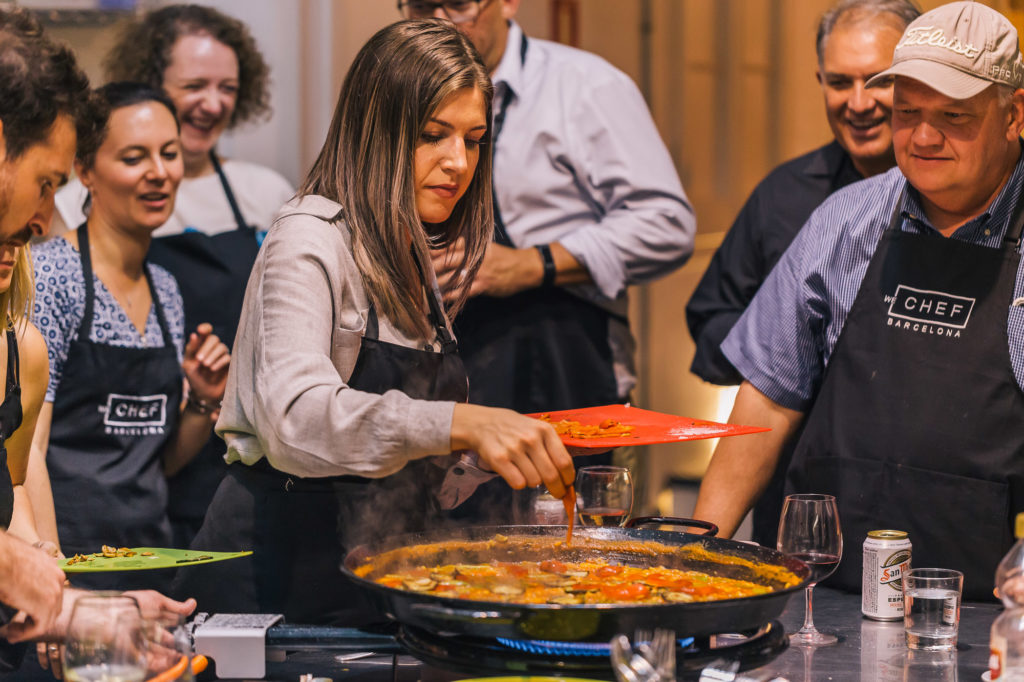
There’s something deeply human about cooking for others. It’s a gesture of care, of humility. In the workplace, where egos and job titles often cross swords, putting on an apron can feel like laying down arms. Here, the CEO peels potatoes. The intern salts the sauce. The sales and IT departments negotiate who stirs next.
The kitchen, when framed as a shared space, has the power to equalize. To force real listening. To organically encourage collaboration without preaching it. And when a team experiences that together, it leaves a lasting mark.
Four ways to cook together (no slide decks required)
1. Collaborative Cooking Workshops
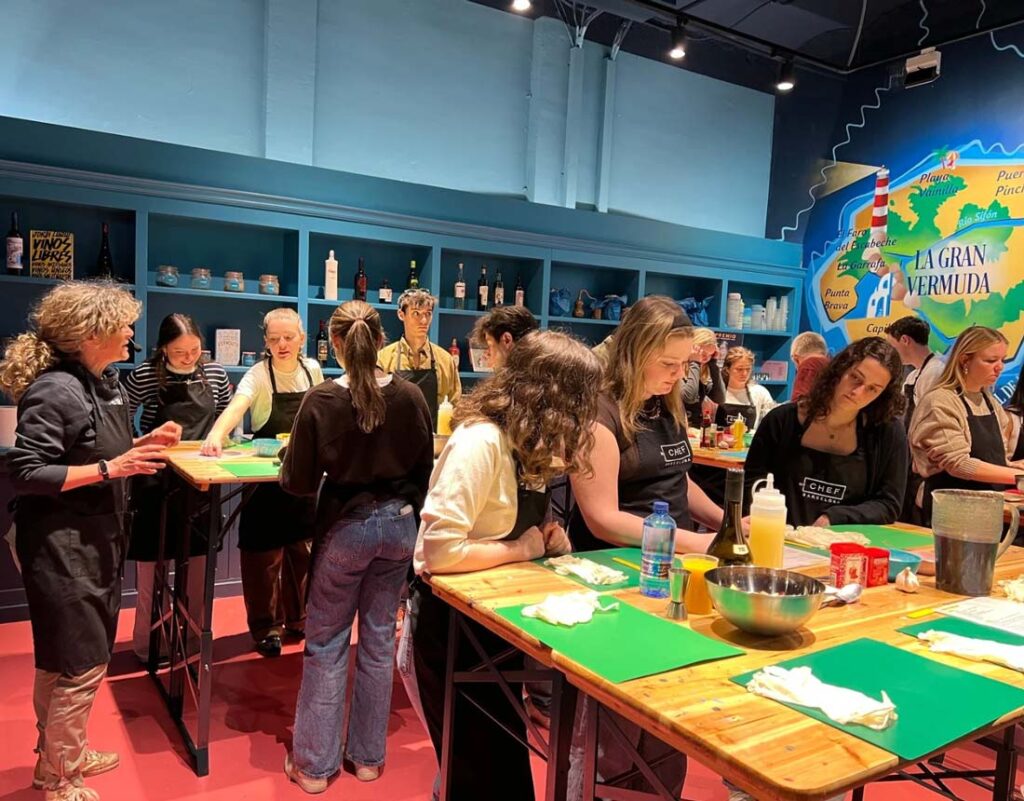
The heart of it all. A chef guides the process, ingredients are laid out, and the group shares a common goal. It’s not about competing, but about creating something together. Ideal for fostering coordination, active listening, and the art of stepping back when needed.
2. Culinary Competitions
Need a little adrenaline? Divide your team, assign surprise ingredients, and set a timer. Competitions are great for encouraging quick decision-making, unleashing creativity, and uncovering natural leadership.
3. Tasting Experiences
Not everything needs to be fast-paced. Sometimes, hearing the crunch of artisan bread or exploring the flavor notes of a single-origin olive oil can bring a team closer together. Sensory experiences are powerful for creating calm, genuine connections.
4. Cooking with Purpose (Social Impact)
Cooking for a cause — like preparing meals for shelters or food banks — gives a whole new layer of meaning to the activity. It fosters empathy, team pride, and a deeper sense of purpose that transcends KPIs.
Bonus ingredients that elevate the experience
Post-event reinforcement
Follow up one week later with a short team reflection: What did you learn? What surprised you? What could we apply in daily workflows? You can even use this feedback to design future workshops or leadership trainings.
Integrate it into your employer branding
Record the event, capture key moments, and share them on internal platforms or social media. Use team quotes or images in onboarding campaigns or recruitment content. Let the flavor of the experience become part of your company story.
Idea: Turn your culinary event into a content piece — a behind-the-scenes video, short interviews, or a visual story about the values you cooked that day.
Gamify it with storytelling
Why not build a challenge around a narrative? “Unlock ingredients,” “solve a recipe mystery,” or build a storyline around each course. Story-driven cooking energizes lateral thinking, engagement, and emotional connection.
Frequently asked questions — honest answers, no fluff
Is this for any type of company?
Absolutely. From startups to multinationals, from legal firms to creative agencies — every team benefits from stronger bonds, better communication, and a good laugh around a shared meal.
What if no one knows how to cook?
Even better. The point isn’t perfection, it’s participation. Roles are tailored to everyone’s comfort level — from chopping and stirring to plating and storytelling.
How long does a session usually last?
Typically between 2.5 to 4 hours, including introductions, cooking, tasting, and wrap-up. Longer formats can be arranged and integrated into company retreats or offsites.
What if someone has allergies or dietary needs?
No worries. A good facilitator will always ask for this in advance and adapt menus accordingly. Inclusion and safety are non-negotiable ingredients.
Can this be done in English (or other languages)?
Of course. In Barcelona, most professional kitchens for corporate groups are multilingual. We Chef BCN offers sessions in English, Spanish, French, and German.
Coffee-scented epilogue: when work tastes better
Companies are made of people. And people need more than goals and deliverables — they need stories, shared laughter, and spaces where nothing is measured except the salt in the sauce.
Gastronomic activities aren’t just a trend. They’re a return to something essential. To taste, touch and teamwork in its most human form.
If you’re looking for a unique, heartfelt way to bring your people together — not just in function, but in spirit — come visit us at We Chef BCN. We can’t promise Michelin stars, but we can promise something more lasting: connection, trust, and a team that cooks as well as it collaborates.