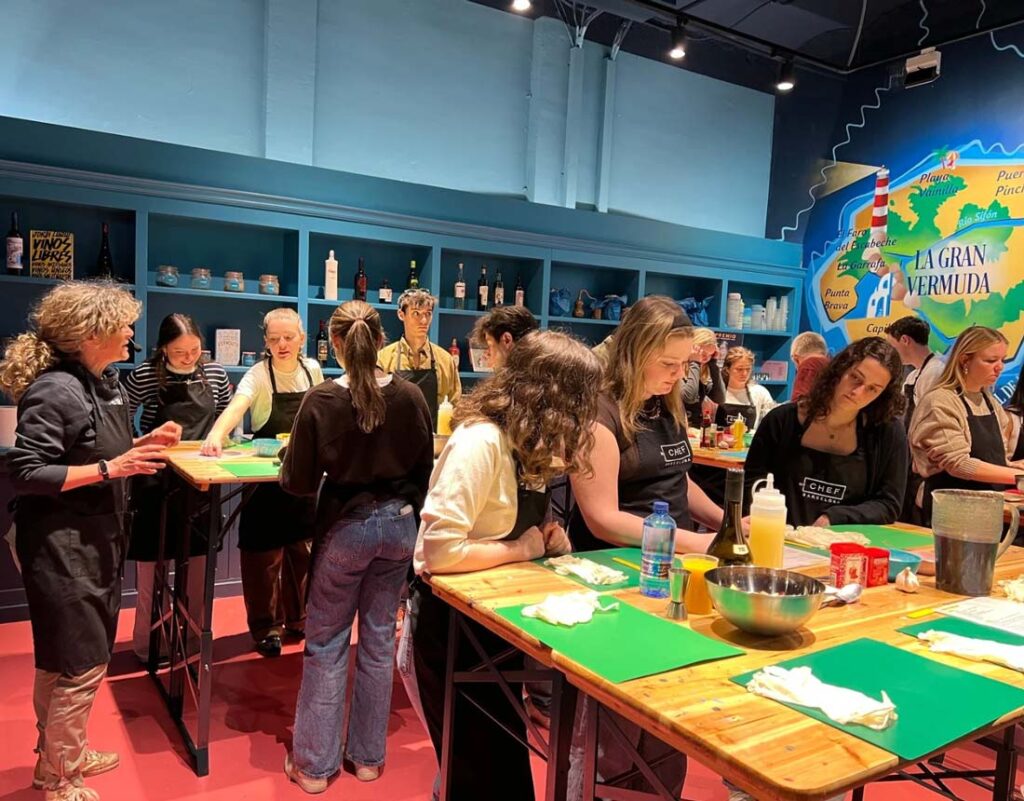
What do a sizzling pan, a stained apron, and a wooden spoon have in common? No, it’s not the beginning of a joke—it’s the perfect setup to bring your team together for real. In the kitchen, there are no hierarchies and no pending emails. Just people collaborating to achieve a common (and delicious) goal.
Organizing a corporate culinary event is no longer a trendy whim—it’s a strategic move. A powerful team-building tool, an emotional lever, and a one-of-a-kind opportunity to foster meaningful bonds beyond spreadsheets.
Barcelona, with its vibrant food scene and culture of enjoyment, has become a hub for these experiences. If you’re wondering why more and more companies are swapping conferences for chef hats and spatulas, keep reading. Things are about to get tasty.
What you’ll learn (and why it matters more than you think)
This isn’t a quick “10 reasons cooking brings teams together” list. You can Google that. This is a deeper, more practical guide with examples you can implement right away.
Here’s what we’ll cover:
- How a culinary experience can improve communication within your teams—and no, it’s not magic; it’s neuroscience applied to leadership.
- Which event formats work best depending on your goal: integration, celebration, motivation, or networking.
- Practical and technical advice: from adapting catering with live showcooking to organizing a coffee break that doesn’t taste like cardboard.
Ready? Let’s turn up the heat.
Cooking as a tangible metaphor for teamwork
What a hot pan says about your workplace culture
Think about it: what happens when you put four people in front of a recipe with no clear instructions? They must listen, delegate, improvise—and laugh when things go wrong. It’s the perfect mirror of a collaborative work environment.
But there’s more.
Kitchens flatten hierarchies and build mutual respect
In the kitchen, everyone gets messy. It doesn’t matter if you’re the CEO or the intern. That sense of equality fosters a level of connection few traditional dynamics can offer.
The feedback is instant—and tasty
Unlike in corporate life, where results take time, culinary activities provide immediate outcomes. The dish is the deliverable. You taste it, you smell it, you evaluate it. That instant feedback loop fosters real-time learning and reflection.
It triggers emotional memory
Studies from the Journal of Positive Psychology show that sensory-rich experiences (touch, smell, taste) leave stronger, longer-lasting impressions. A well-designed culinary event is remembered far longer than any traditional workshop.
Aprons on: formats that actually work
Some events fade from memory by the next morning. Others become the stuff of office legend. The difference lies in thoughtful planning and emotional design.
Paella Competition: Flavor, Strategy, and Plenty of Laughter
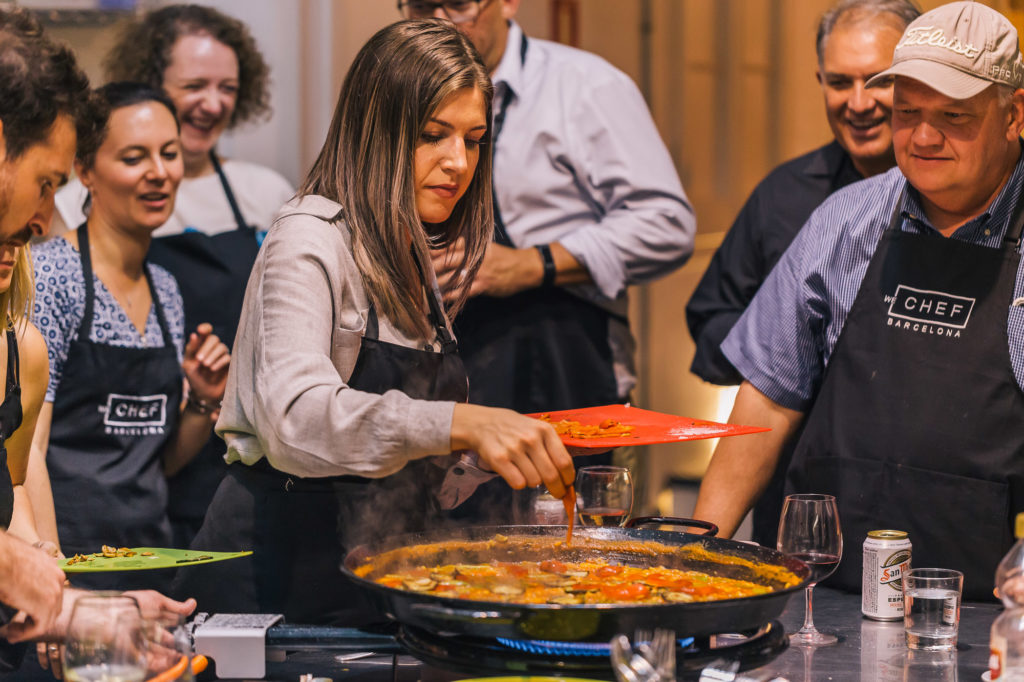
One of Barcelona’s standout formats is the paella team-building competition by WeChefBCN. It blends culinary creativity with healthy competition and group dynamics.
- Teams receive surprise ingredients.
- A professional chef guides and judges.
- The challenge: create an innovative, delicious, and well-presented paella.
Ideal for organizations that want to spark creativity, foster leadership, and boost friendly competitiveness.
Collaborative Cooking Workshops
Perfect for new teams or those needing smoother integration. Participants follow a recipe together, but there’s room to improvise, contribute, and share ideas.
Popular themes include:
- Mediterranean cuisine using seasonal ingredients.
- Creative tapas with interactive cooking stations.
- International dishes for multicultural teams.
Showcooking with Tasting and Networking
Best suited for client-facing events, product launches, or hybrid gatherings. A chef performs live while guests enjoy the performance and sample the results.
It creates effortless conversation, lowers barriers, and enhances your brand image as a host.
The small details that make a big difference
Planning a corporate culinary event takes more than just enthusiasm. It requires logistics, expertise, and a sharp eye for detail.
Step 1: define your objective like a recipe
This isn’t just about “doing something different.” Set a clear purpose:
- Is it to improve cross-functional communication?
- Celebrate a company milestone?
- Break the ice with a newly formed team?
Your “why” will determine everything—from the format to the menu.
Step 2: choose the right space—with heart and head
Barcelona offers many attractive venues, but not all are suitable for professional culinary events.
Look for:
- Fully equipped, professional-grade kitchens.
- Comfortable, accessible spaces with good lighting and ventilation.
- A support team that understands both gastronomy and group facilitation.
Pro tip: WeChefBCN delivers on all fronts—location, experience, and atmosphere. They don’t just offer a venue; they create emotional journeys.
Step 3: sweat the small stuff (that’s where the magic is)
- Personalized aprons: not just swag—team identity in cloth form.
- Quality coffee breaks: real coffee, fresh fruit, healthy bites.
- Dietary inclusion: vegetarian, gluten-free, halal—ask early, plan thoroughly.
- Charismatic facilitators: a great chef with social skills is part cook, part storyteller.
Bonus section: what brochures don’t tell you
What if nobody knows how to cook?
Even better. The less experience your team has, the more laughter, surprises, and connection they’ll experience. Remember: the goal isn’t perfection—it’s participation.
Can it be combined with strategic work?
Absolutely. Many companies host a morning strategy session followed by an afternoon cooking event. It’s an ideal way to decompress, reinforce insights, and boost team energy.
What about remote or hybrid teams?
There are hybrid-friendly formats. Some participants cook in person, others join virtually with pre-sent kits. You can stream the showcooking and interact through live Q&A or mini-challenges.
FAqs: answering real concerns with real answers
How long does a culinary event last?
Depends on the format:
- Full workshops: 3–4 hours.
- Showcooking + tasting: 1.5 to 2 hours.
- Competitions: up to 5 hours if you include awards and networking.
What team size works best?
Anywhere from 10 to 80 participants. Larger groups can be split into rotating teams or concurrent stations.
Can we include our company branding?
Yes. You can brand menus, aprons, utensils—even the event playlist. Tailor the experience to match your internal values or campaigns.
Is it just a “fun experience” or does it have lasting impact?
That depends on alignment. When the activity reflects a broader cultural or leadership goal, the impact is emotional and strategic. But if it’s isolated, it risks becoming just “another event.”
Final takeaway: why this might be the best move you make this year
A corporate culinary experience isn’t just an entertaining activity. It’s a statement of values. It says to your team: “We see you. We value you. And we trust you enough to laugh, mess up, and create something beautiful together.”
In a world where talent is scarce and connection is key, experiences with heart are the most powerful asset for building resilient company culture.
Because anyone who’s cooked a paella on a tight deadline with colleagues comes back to the office with new eyes—and new allies.
So, are you ready to ignite your team’s spirit?
Explore all the possibilities with WeChefBCN and design the culinary event your team will still be talking about months after the last bite.